

Football is heading to the Middle East for the 2022 Fifa World Cup in Qatar, but how many stadiums will host the event and what will happen to the grounds after the tournament?
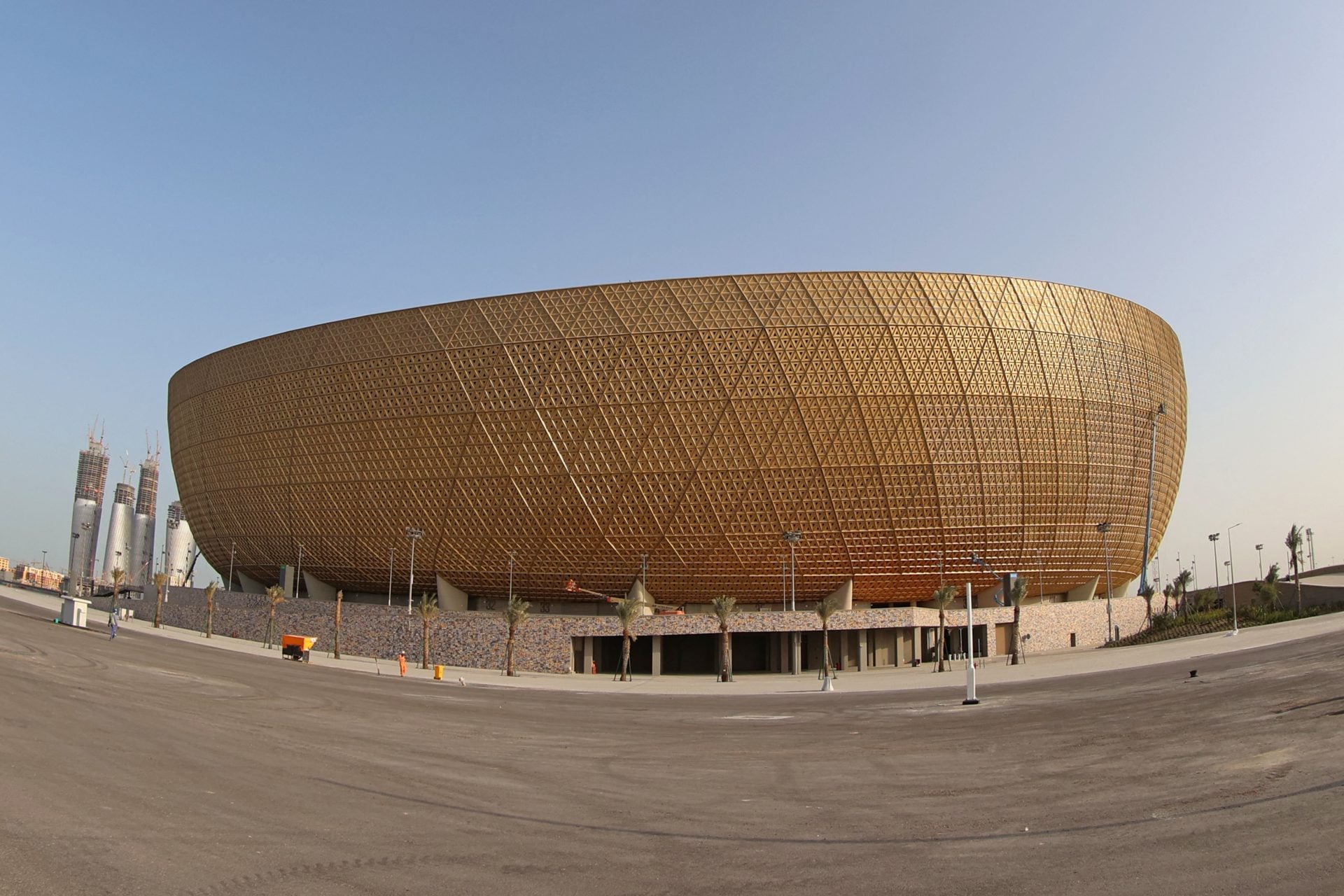
Well, eight stadiums will host the 32 teams from the opening game on November 21 to the final on December 18. Qatar will kick the tournament off at the Al Bayt Stadium in Al Khor, while the eventual finalists will head to Doha a month later to play at the Lusail Stadium.
The Lusail Stadium will have the biggest capacity of any ground used for the tournament. Fitting, given the ground is in Qatar’s capital and most populous city, Doha, which boasts more than 2.3 million residents. Four further cities will host games during the World Cup.
- WORLD CUP: When is the 2022 World Cup draw?

Lusail Stadium
The Lusail Stadium in Doha will be the centre-piece of the Qatar World Cup with a capacity of 80,000. It will also feature innovative cooling solutions to help combat the local climate during the tournament. The stadia will also draw power from a solar farm outside the city.

Al Bayt Stadium
With a capacity of 60,000, the Al Bayt Stadium that will host the opening game of the 2022 World Cup in Qatar and the opening ceremony is the second-largest stadium to be used. It was designed to resemble the tents historically used by nomadic people in the Gulf region.
The stadium, which was opened on November 30, 2021 for the Fifa Arab Cup following seven years of construction, will also host a total of nine matches during the World Cup.

Education City Stadium
Opened on June 15, 2020 with a capacity of 45,350, the Education City Stadium is one of the world’s most environmentally sustained stadiums. It was also the first Qatar 2022 venue to earn a five-star rating from the Global Sustainability Assessment System (GSAS).

Khalifa International Stadium
While the ground has undergone multiple renovations – most recently for the World Cup – the Khalifa International Stadium was first built in 1976. The current version was launched on May 19, 2017 with a capacity of 45,416, and is part of the Doha Sports City complex.
It is named after Qatar’s former Emir, Khalifa bin Hamad Al Thani, and has been the home stadium for the Qatari national team since its original construction.

Ahmad bin Ali Stadium
The Ahmad bin Ali Stadium in Al-Rayyan has a capacity of 44,740 and took its design from the desert landscape around the ground and Qatar. It features several sand dune-esque structures after a redesign for the World Cup following its initial build completion in 2003.

Ras Abu Aboud Stadium
The Ras Abu Aboud Stadium, also known as Stadium 974, has a capacity of 40,000 and will be completely dismantled after the 2022 Qatar World Cup. It was designed using shipping containers and other reusable elements, which are intended for reuse in other projects.
It is the first stadium used for a World Cup specifically designed to be taken down after the tournament. While the stadia will host just six competitive games during its planned life.

Al Thumama Stadium
Launched on October 22, 2021, the Al Thumama Stadium has a capacity of 40,000 and will be used up to the quarter-finals of the 2022 World Cup in Qatar. It is also one of five stadia in Doha with the Education City Stadium, Khalifa Stadium, Stadium 974 and Lusail Stadium.
Qatari architect Ibrahim M Jaidah designed the ground with inspiration from the ‘Gadhiya’, which is a traditional woven headcap worn by men and boys throughout the Middle East.

Al Janoub Stadium
Located in Al-Wakrah, the Al Janoub Stadium has a capacity of 40,000 and was designed by British-Iraqi architect Zaha Hadid. It was created to resemble the traditional Dhow boats used by pearl divers from the region, yet will only host one knockout fixture in the last 16.
Receive exclusive football transfer news and updates twice a week to your mailbox